
Realistic matters more than impressive
The most useful AI dating photos are not the ones that look the most cinematic. They are the ones that make a stranger think, this seems like a good photo of a real person. Dating apps are built on quick trust. If a photo looks too perfect, too glossy, or too disconnected from everyday life, it can make the whole profile feel less believable.
That does not mean AI dating photos need to look boring. They can have better light, cleaner framing, stronger backgrounds, and more intentional wardrobe than the photos sitting in your camera roll. The key is restraint: improve the photo without turning the person into a different character.
- Keep your real face shape, age, hair, facial hair, and general build intact.
- Choose scenes that could plausibly exist in your life.
- Prefer natural expression over model-like posing.
The face has to survive the edit
A dating photo fails when the person no longer feels recognizable. Small changes can be enough to break trust: a sharpened jawline, smoother skin than real life, different hair density, brighter eyes, or a smile that does not match the rest of the face. Those edits may look flattering in isolation, but they create distance.
When reviewing an AI output, do not ask only whether it looks good. Ask whether a friend would immediately recognize you, whether the age feels right, and whether the expression is something your face actually does. If the answer is no, skip it.
- Reject outputs with plastic skin or erased smile lines.
- Watch for changed eye shape, nose shape, jawline, and hairline.
- Keep asymmetry, texture, and normal human detail.
Everyday settings beat fantasy settings
Luxury hotel lobbies, sports cars, penthouse balconies, and dramatic neon bars can make an AI photo look expensive, but expensive is not the same as trustworthy. For dating, a believable cafe, park, bookstore, kitchen, street corner, or trail usually works harder because it gives the viewer a normal scene to imagine stepping into.
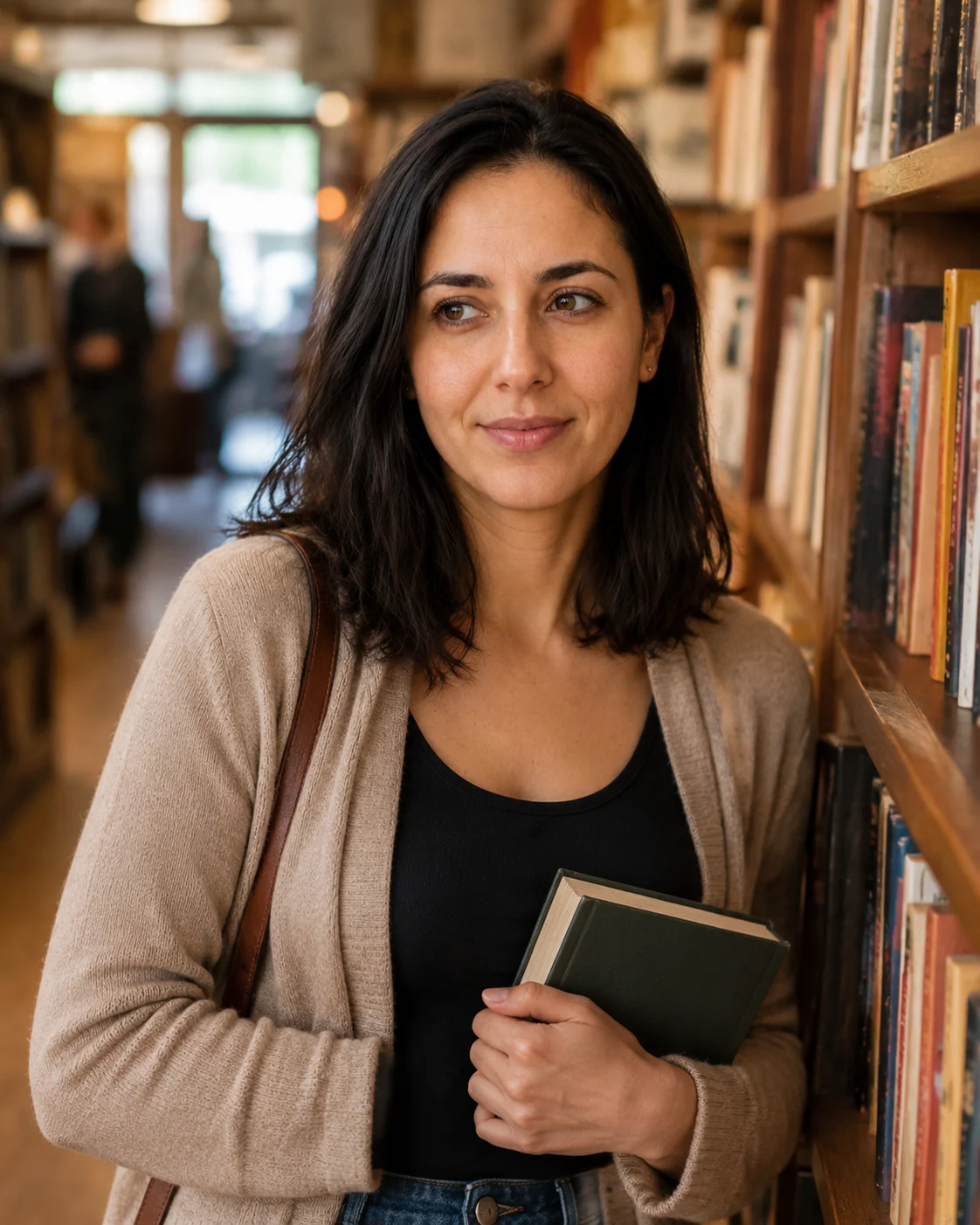
Styles like Rainy Window Cafe, Weekend Coffee Walk, Park Bench Laugh, Bookstore Browse, and Farmers Market Smile are useful because they look like moments a friend could have captured. The setting adds context without asking the viewer to believe a whole invented lifestyle.
- Use backgrounds with small real-life details, not showroom perfection.
- Avoid locations that imply status you do not actually want to claim.
- Let the environment support the photo instead of becoming the main character.
Lighting should flatter without announcing itself
Bad AI photos often have lighting that feels too controlled: glowing skin, impossible rim light, studio-perfect shadows, or a background that looks lit separately from the person. Good dating photos usually have simpler light. Window light, overcast daylight, soft golden hour, and gentle indoor warmth are easier to believe.
If you want a more polished result, keep the polish attached to real-world lighting. A warm cinematic portrait can still work if the expression stays relaxed and the skin has texture. A cafe photo can feel premium if the face is readable and the light falls naturally.
- Choose soft directional light over harsh flash or synthetic glow.
- Make sure the person and background feel lit by the same scene.
- Avoid hyper-smooth highlights that make skin look waxy.
Use AI photos as a profile set, not a costume change
One realistic AI photo can rescue a weak profile. Six unrelated AI photos can make the profile feel suspicious. The set should still look like the same person moving through a believable life, with consistent age, grooming, wardrobe taste, and energy across every image.
A strong set might include one clear main photo, one warm lifestyle photo, one outdoor context photo, one conversation hook, and one slightly polished portrait. The variety matters, but the identity has to stay stable.
- Main photo: Weekend Coffee Walk, Park Bench Laugh, or Blue Sky Portrait.
- Warm lifestyle: Rainy Window Cafe, Houseplant Morning, or Kitchen Pancake Moment.
- Conversation hook: Bookstore Browse, Record Store Find, or Comedy Club Glow.
- Outdoor context: Weekend Hike Trail, Beach Boardwalk Breeze, or Farmers Market Smile.
What makes an AI dating photo look fake
Most fake-looking AI photos fail in predictable ways. The person looks too symmetrical. The clothing is too perfect. The teeth are too bright. The background is clean in a way no real phone photo would be. The pose looks like a catalog image, but the caption asks you to believe it was candid.
The fix is not to make the photo messy for the sake of mess. The fix is to keep enough ordinary detail: slight fabric wrinkles, real skin texture, natural posture, imperfect background depth, and an expression that feels caught rather than performed.
- Too fake: luxury backdrop, glass skin, perfect grin, fashion-ad pose.
- More believable: casual outfit, readable face, normal posture, useful background detail.
- Best test: would this photo still make sense if a friend said they took it?
A final review checklist
Before you publish AI dating photos, zoom out and judge the whole profile. The question is not whether each image is individually attractive. The question is whether the set feels honest enough for someone to start a conversation without second-guessing what they are seeing.
If the photos look like you, show your face clearly, include plausible settings, and leave room for normal human texture, they are doing the right job. Real beats perfect because real is what makes the next message feel safe to send.
- The photo still looks like you today.
- The setting feels plausible for your actual life.
- The expression is natural, not pasted on.
- The image improves lighting and framing without inventing a new identity.
- The full set has variety without looking like several different people.