
You can build a strong profile without a photographer
Taking dating profile pictures by yourself does not mean filling your profile with arm-length selfies. With a phone, a stable surface or small tripod, and a little planning, you can create photos that look relaxed, varied, and believable. The real difference comes from setting up a moment and then stepping into it.
The aim is not to imitate a professional campaign. It is to make the photos feel like good versions of moments that could happen in your real life. A clear face, natural expression, useful setting, and consistent appearance will do more for the profile than expensive equipment or dramatic editing.
- Use your rear camera when practical for better image quality.
- Build a short shot list before you leave home.
- Take many frames so you can choose natural expressions later.
Start with a phone setup that does not look like a selfie
Place your phone around eye level and far enough away to avoid the stretched perspective of a close front-facing camera. A compact tripod is easiest, but a shelf, bench, windowsill, or stable stack of books can work. Keep the lens clean and use the normal camera lens rather than an ultra-wide setting.
Use a timer, remote shutter, smartwatch, or video mode so you are not reaching toward the phone in every frame. If you record short video clips, move slowly through a few expressions and poses, then select sharp frames afterward. This often feels more natural than trying to produce one perfect still image on command.
- Set the camera near eye level for the main portrait.
- Stand several feet away and crop later if needed.
- Turn on the grid to keep walls, horizons, and doorframes straight.
Find soft light before choosing a pose
Light has a bigger effect than the phone model. Indoors, face a large window and switch off harsh overhead lights if they create shadows under your eyes. Outdoors, use open shade, an overcast day, or the softer light near the beginning or end of the day. Avoid standing with bright midday sun directly overhead.
Check that both eyes are visible and that the brightest part of the frame is not a window or sky behind you. Rainy Window Cafe, Houseplant Morning, Blue Sky Portrait, and Weekend Coffee Walk are useful references because the light keeps the face readable without making the scene feel like a studio.
- Face toward the light or turn slightly to one side.
- Tap your face on screen to set focus and exposure.
- Avoid mixing strong window light with yellow ceiling light.
Make the first photo simple and unmistakable
Your first dating photo should clearly show what you look like now. Frame it from the chest or waist up, keep your eyes visible, and use a clean background with enough context to avoid an ID-photo feeling. Wear a familiar outfit that fits well and separates you from the background.
Take several versions with small changes: look directly at the camera, glance slightly away, soften your shoulders, and try both a small smile and a natural laugh. Do not force a dramatic pose. The best main image often comes from the moment just before or after you thought the timer was finished.
- Keep sunglasses, large hats, and other face-covering accessories off.
- Leave a little space around your head for app-specific cropping.
- Choose the frame that looks most like you in person, not the most edited one.
Create candid movement instead of pretending to be candid
A convincing candid photo needs an action. Walk toward a mark, browse a shelf, pour coffee, adjust a jacket, sit down, or look at something in the environment. Repeating a simple movement gives your hands a purpose and changes your expression from frame to frame.
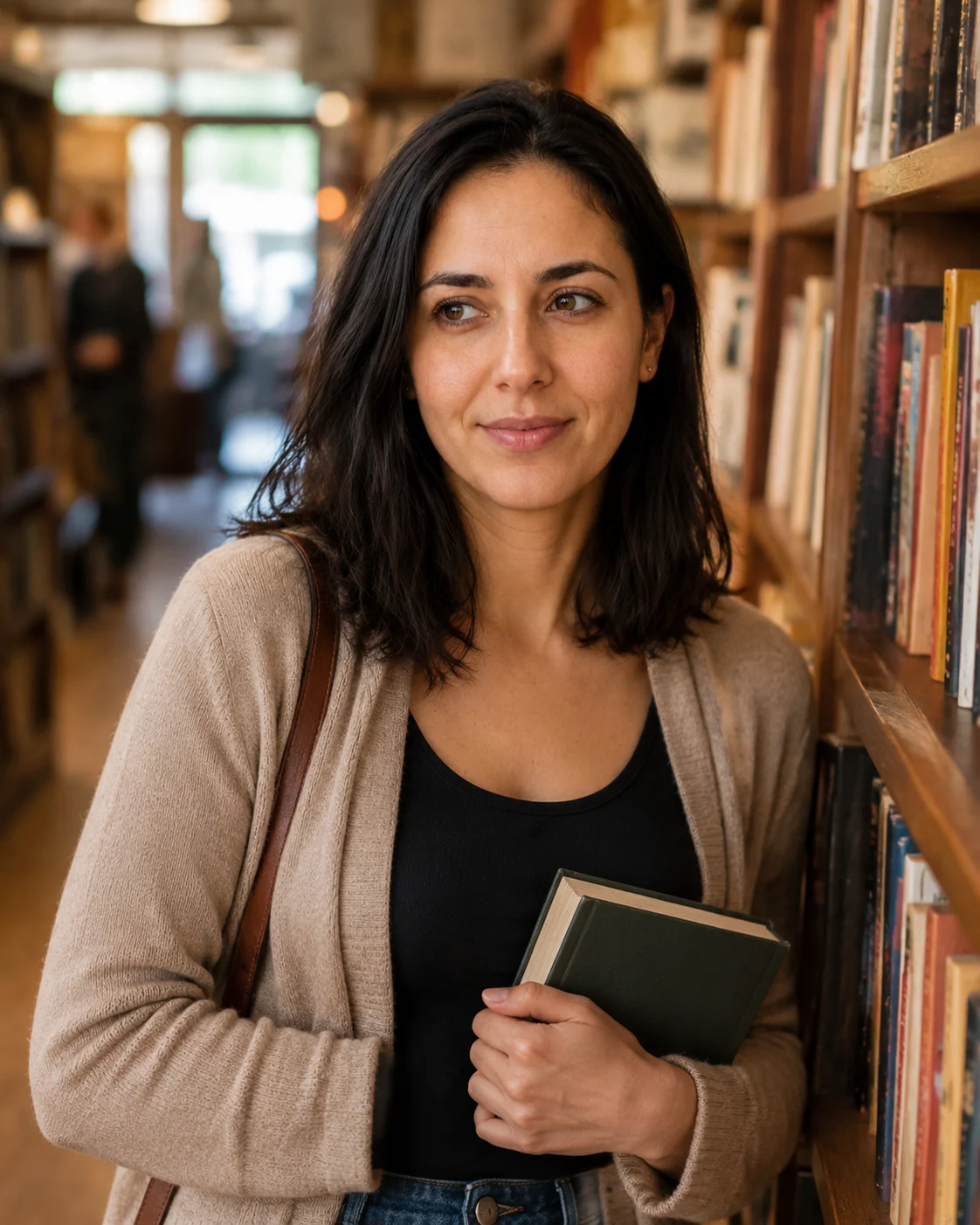
Video mode or burst capture is especially useful here. Park Bench Laugh, Bookstore Browse, Farmers Market Smile, Casual Bike Stop, and Food Truck Bite all work as references because the person has something natural to do. The activity supports the portrait without taking over the image.
- Choose one small action that belongs in the location.
- Move slowly enough for the camera to keep you sharp.
- Look away for some frames, but include enough photos with visible eyes.
Change location, distance, and energy
A profile made in one corner of one room can feel repetitive even when every image is technically good. Plan two or three nearby locations and change the framing at each one. Capture a close portrait, a waist-up lifestyle image, and a full-body or environmental shot rather than six versions of the same composition.
You can create useful variety in one afternoon. Start near a window at home, move to a cafe or bookstore, then finish in a park or neighborhood street. Change one layer of clothing between locations so the set feels varied but still consistent with your normal style.
- Vary close, medium, and full-body framing.
- Use at least one indoor and one outdoor setting.
- Change posture and expression along with wardrobe and location.
Use a six-photo shot list
A shot list removes the pressure to improvise while the timer is running. Give each photo one job and stop when you have a few believable options for that slot. You do not need to publish all six immediately, but planning for six prevents the final profile from becoming a collection of nearly identical portraits.
Review the sequence as thumbnails after the shoot. The first three photos should establish your face, warmth, and one conversation hook. The later images can widen the context, add polish, and finish with a little personality or movement.
- 1. Clear main portrait near a window or in open shade.
- 2. Warm everyday photo with coffee, cooking, or a relaxed walk.
- 3. Interest photo in a bookstore, museum, market, or activity setting.
- 4. Full-body outdoor image with natural posture.
- 5. Dressed-up photo for dinner, an event, or an evening setting.
- 6. Playful finish with a pet, sport, food, or candid laugh.
Edit lightly and reject anything that changes your identity
Basic edits can help: straighten the frame, crop distractions, adjust exposure, and correct color so skin looks natural. Avoid heavy filters, aggressive skin smoothing, face reshaping, or background replacement that makes the light inconsistent. The final image should still resemble the scene you photographed.
AI-assisted photos can fill gaps when your camera roll lacks a specific setting or polished portrait, but use the same standard. Keep your current face, age, hair, build, and style. A useful image should look like a believable photo of you, not a more impressive stranger with similar features.
- Keep normal skin texture and facial detail.
- Check hands, clothing, reflections, and background geometry.
- Compare every edited image with a recent unedited photo before publishing.
Choose the photos that feel easiest to trust
After the shoot, make a first pass for technical quality and a second pass for personality. Remove blurry frames, closed eyes, awkward crops, and repeated poses. Then ask which remaining images feel current, relaxed, and consistent enough that a stranger could recognize you immediately in person.
Learning how to take dating profile pictures by yourself is mostly learning how to create comfortable conditions. Stable framing, soft light, a real activity, and enough attempts will take you further than trying to perform confidence for a single shot. The best result should feel clear and alive, not flawless.
- Your face is obvious in the first image.
- Every photo contributes new information.
- The full set looks like the same person on the same stage of life.
- At least one photo gives someone an easy question to ask.
- No image depends on heavy filtering or implausible editing.